

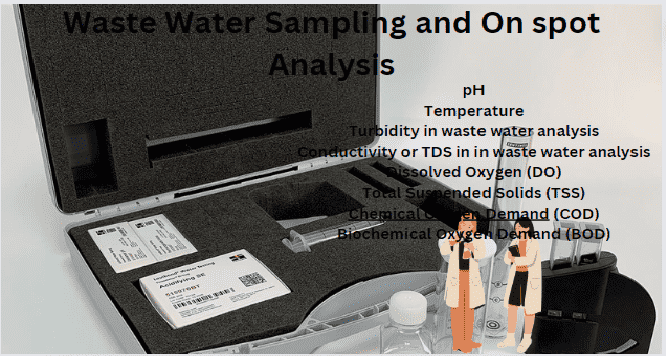
On-Spot Analysis of WasteWater
On-spot analysis of wastewater refers to the parameters that can quickly be measured or assessed directly at the sampling site, without the need for laboratory analysis. These parameters provide immediate information on the quality of the wastewater analysis and can help guide decision-making processes. Here are some common analyte on-the-spot test parameters for wastewater analysis.
pH of WasteWater analysis
pH measures the acidity or alkalinity of the wastewater. It is an important parameter, as it can influence the behavior of pollutants and the effectiveness of treatment processes. The transportation to the laboratory will alter the analyte’s concentration.
Temperature
Wastewater temperature can affect various biological and chemical processes, such as microbial activity and the solubility of contaminants. The analysis is in the effluent drain (wastewater), and the standard set for this is not greater than 40 degrees Celsius.
Turbidity in WasteWater analysis
Turbidity is a measure of the cloudiness or haziness of the wastewater caused by suspended particles. High turbidity levels can indicate the presence of solids or other particulate matter.
Conductivity or TDS in wastewater analysis
Conductivity measures the ability of the wastewater to conduct electricity and is related to the concentration of dissolved ions, such as salts and metals. It will provide results for the overall salinity and ion composition of the wastewater.
Dissolved Oxygen (DO)
DO levels indicate the amount of oxygen dissolved in the wastewater. Low DO levels can indicate poor water quality and inadequate oxygenation, which may be harmful to aquatic organisms. The DO is extremely sensitive, as exposure to air can alter the results, necessitating immediate analysis.
Total Suspended Solids (TSS)
TSS represents the total concentration of suspended solids in the wastewater. High TSS levels can indicate poor water quality and may affect clarity, oxygen levels, and aquatic habitat. Total suspended solids (TSS) are measured using spectrophotometer limits, with TSS levels being less than 200 mg/L. This parameter may dissolve solids while transferring to the laboratory.
Chemical Oxygen Demand (COD)
COD measures the amount of oxygen required to chemically oxidize organic and inorganic compounds in the wastewater. However, it provides an indication of the organic load and the potential for oxygen depletion in receiving water bodies. It has the limit of 150 mg/L for industrial effluent and 400 mg/L for municipal waste. While transferring a sample to the laboratory, it will change the results. The chemist must collect the sample directly from the waste effluent during the sampling process.
Biochemical Oxygen Demand (BOD)
BOD measures the amount of oxygen consumed by microorganisms during the biochemical degradation of organic matter in the wastewater. It offers information about the biodegradability of organic pollutants and the potential for oxygen depletion in aquatic environments. You only analyze these parameters on-site and then shift the incubator to the laboratory.
Ammonia in WasteWater analysis
Ammonia is a nitrogen compound commonly found in wastewater. High levels of ammonia can indicate the presence of organic matter or inadequate treatment of nitrogen-containing compounds. Additionally, major sources are the fertilizer and food storage industries.
Phosphorus & Wastewater Analysis
Phosphorus is another nutrient often found in wastewater. Elevated phosphorus levels can contribute to eutrophication and algal blooms in receiving water bodies.
These on-the-spot parameters provide valuable information about the immediate quality of wastewater and can help in making rapid assessments and decisions regarding treatment processes, discharge management, and environmental protection measures. Furthermore, on-the-spot analysis of wastewater is helpful for environmental monitoring. However, changing the treatment parameter for better treatment or making a dilution with water is possible.