

Biohazard Waste of Industries
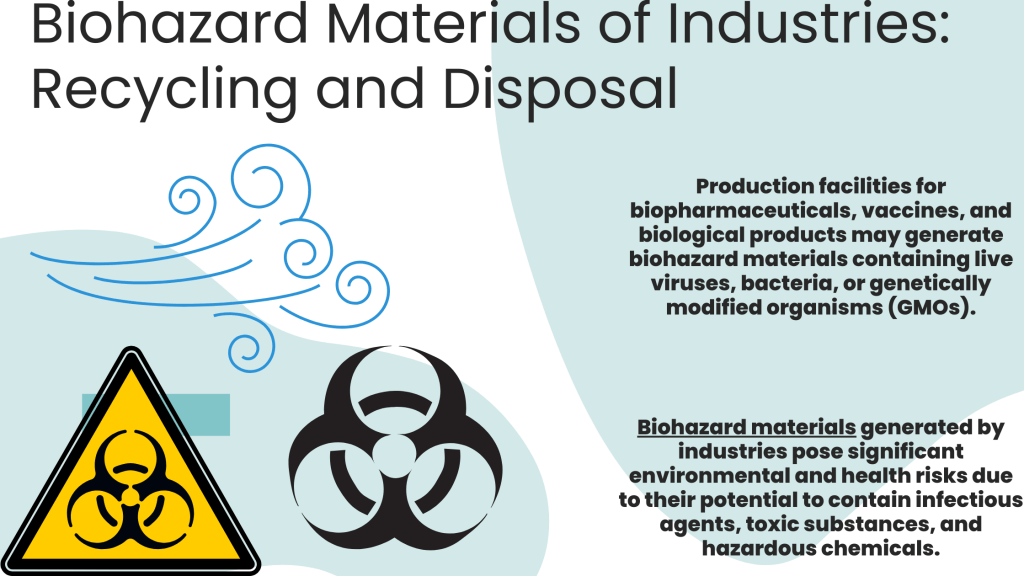
Biohazard Waste of Industries causes significant environmental and health risks due to its potential to contain infectious agents, toxic substances, and hazardous chemicals. These materials can originate from various industrial processes and activities, including manufacturing, research and development, healthcare, agriculture, and waste management. Understanding the sources, types, and management of biohazard waste in industry settings is crucial for mitigating risks and ensuring environmental protection. It is the responsibility of individuals and the state’s Environmental Protection Agency to monitor compliance with environmental laws and to protect the environment.
Sources of Biohazard Waste of Industries
Biopharmaceutical Manufacturing
Biological Agents
Production facilities for biopharmaceuticals, vaccines, and biological products may generate biohazard materials containing live viruses, bacteria, or genetically modified organisms (GMOs). Biohazard material by this process is always treated through incineration by their own facility or given to an incineration service provider nearest to the production facility because of their risk to the environment.
Contaminated Waste
Waste materials such as cell cultures, fermentation broth, and contaminated equipment can contain infectious agents and biohazardous substances. All the contaminated material should be treated before disposal.
Healthcare Facilities
Medical Waste
Hospitals, clinics, and laboratories generate biohazardous medical waste, including blood, tissues, needles, and other sharps contaminated with infectious agents. All departments and industries are bound to properly dispose of the waste to an incineration plant by their own facility or to a service provider. The segregation of waste is also a crucial step for hospital clinics and research laboratories.
Laboratory Research
Research laboratories in healthcare settings may produce biohazard materials from diagnostic testing, experimental studies, and clinical trials involving biological agents. Biohazard material is always sent to the incinerator industry, where, after proper combustion and treatment, the material is sent to landfill sites.
Agricultural and Food Processing
Animal Waste
Agricultural operations and food processing facilities can generate biohazard materials from animal waste, manure, and by-products containing zoonotic pathogens. This type of waste is also toxic and can toxify the environment and human health. The slaughterhouses also produce an optimal amount of biohazard material of blood, meat, fat, and the remaining non-edible portions of animals.
Pesticides and Chemicals
The use of pesticides, herbicides, and agricultural chemicals can result in biohazard materials containing toxic substances and hazardous chemicals. But these compounds may contaminate the air quality, soil, and underground water.
Waste Management and Recycling
Hazardous Waste
Industrial facilities generating hazardous waste, including chemical solvents, heavy metals, and toxic substances, may also produce biohazard materials if the waste is contaminated with biological agents. All types of hazardous waste are treated or incinerated before disposal or used for landfills.
Recycling Operations of Biohazard Waste 0f Industries
Recycling facilities handling biomedical waste, electronic waste, and other recyclable materials can encounter biohazard materials from contaminated items and residues. Recycle if the facility is available; otherwise, incineration treatment is mandatory because hazardous material is always treated.
Management of Biohazard Waste of Industries
Proper management of biohazard materials in industries is essential to prevent environmental contamination, protect workers and the public, when comply with regulatory requirements. The management of waste material is also benefits the business by employee health and recycling or by protecting the environment. Industries should also implement comprehensive biohazard control measures.
Risk Assessment and Hazard Identification
Conducting risk assessments and hazard identification to determine potential sources of biohazardous materials, evaluate exposure risks, and develop appropriate control strategies. Industries should nominate the focal person and team for working on risk assessment and hazard identification. Through these actions, industrial production and employee health will improve.
Engineering Controls of Biohazard Waste of Industries
Implementing engineering controls such as ventilation systems, containment facilities, and isolation measures to minimize the release and spread of biohazard materials within industrial settings. Measures of system and control to process will also be profitable for business.
Personal Protective Equipment (PPE)
Providing appropriate PPE, including gloves, masks, gowns, and eye protection, to workers to minimize exposure risks when handling biohazard materials. PPEs are always essential while working in industry to protect personal health and company business.
Waste Segregation, Storage, and Disposal of Biohazard Waste of Industries
Segregating hazardous materials from other waste streams, storing them in leak-proof, puncture-resistant containers, and ensuring proper treatment and disposal through autoclaving, incineration, or chemical disinfection in compliance with regulatory guidelines. These processes are all according to the laws of the Environmental Protection Agency (EPA). These measures can protect the environment and underground water chemistry.
Training on Biohazard Waste of Industries
Providing comprehensive training and education programs for employees on biohazard awareness, safe handling practices, emergency response procedures, and regulatory compliance. Because it is the prime responsibility of any business owner that he should always train their employees for all EPA regulations and rules made under state law.
Summary of Biohazard Material of Industries
Biohazard materials generated by industries encompass a wide range of biological agents, contaminated waste, and hazardous chemicals. Which pose significant risks to human health and the environment. Effective management of hazardous materials in industrial settings requires proactive risk assessment, implementation of engineering controls and PPE, and proper waste segregation, storage, and disposal.
The ongoing training and education to ensure compliance with regulatory requirements and foster a culture of safety and environmental stewardship. In every country there is an environmental law that includes a brief description of proper disposal and segregation of waste. Collaboration between industry stakeholders, government agencies, and environmental health professionals is essential to develop and implement sustainable solutions for biohazard control and prevention in industrial environments. To protect the environment, industries should always cooperate with government bodies. The government should consider and act upon ideas and suggestions in accordance with state law to ensure the protection of the environment.